
The bet that rewards reading the first 40 minutes
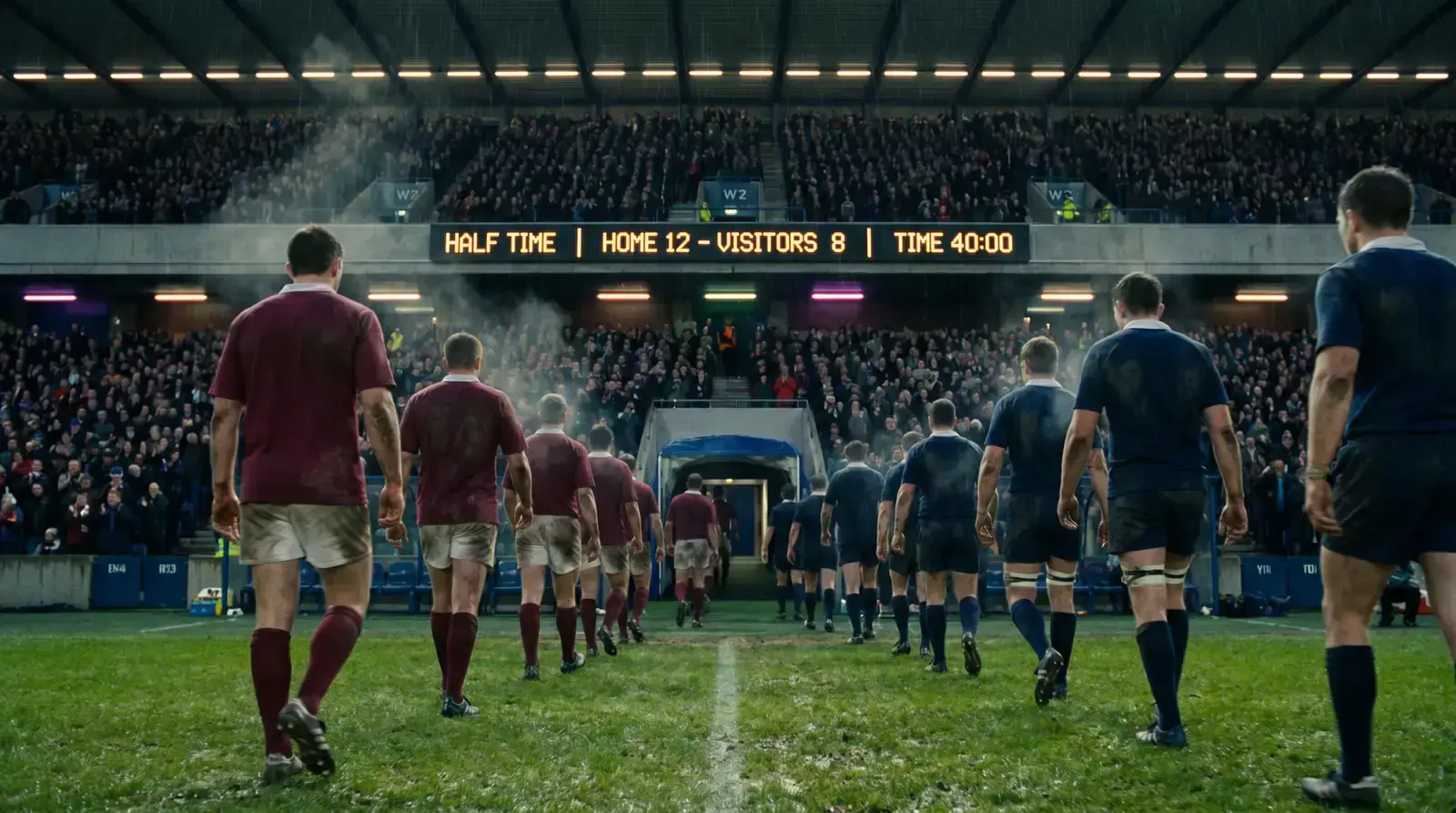
One of my favourite slips at the last Rugby World Cup was a half-time/full-time on a heavy favourite to lead at the break and win. The match was a pool fixture, the favourite was at 1.10 to win outright, and the HT/FT version was priced at 1.55. Same expected outcome, almost 50% more on the return. The bookmaker had not done anything generous. The market simply asked a slightly harder question, and the price reflected it.
HT/FT betting — sometimes labelled “double result” — settles on two simultaneous outcomes: the leading side at half-time, and the winning side at full-time. You choose one of nine combinations: home/home, home/draw, home/away, draw/home, draw/draw, draw/away, away/home, away/draw, away/away. The draw at half-time is more common than punters expect; the draw at full-time is rarer than they expect; and the cross results (lead at half-time but lose, trail at half-time but win) are the kind of upsets that send the bookmaker’s margin straight to the bank.
The market exists because match-winner bets on heavy favourites pay very little, and a meaningful slice of punters want to back the favourite at better-than-money-line odds. HT/FT does exactly that by adding the half-time condition. The favourite still wins, but they have to be ahead at half-time too — a structural constraint that pays you more.
How the double-result market works
The settlement rule is mechanical and unambiguous. At half-time, the score is taken. Whoever leads by any margin is the half-time winner. Tied scores at half-time settle as draw/whatever the full-time result is. At full-time, the score is taken again, and the full-time leg settles the same way. Both legs must match your selection for the slip to pay.
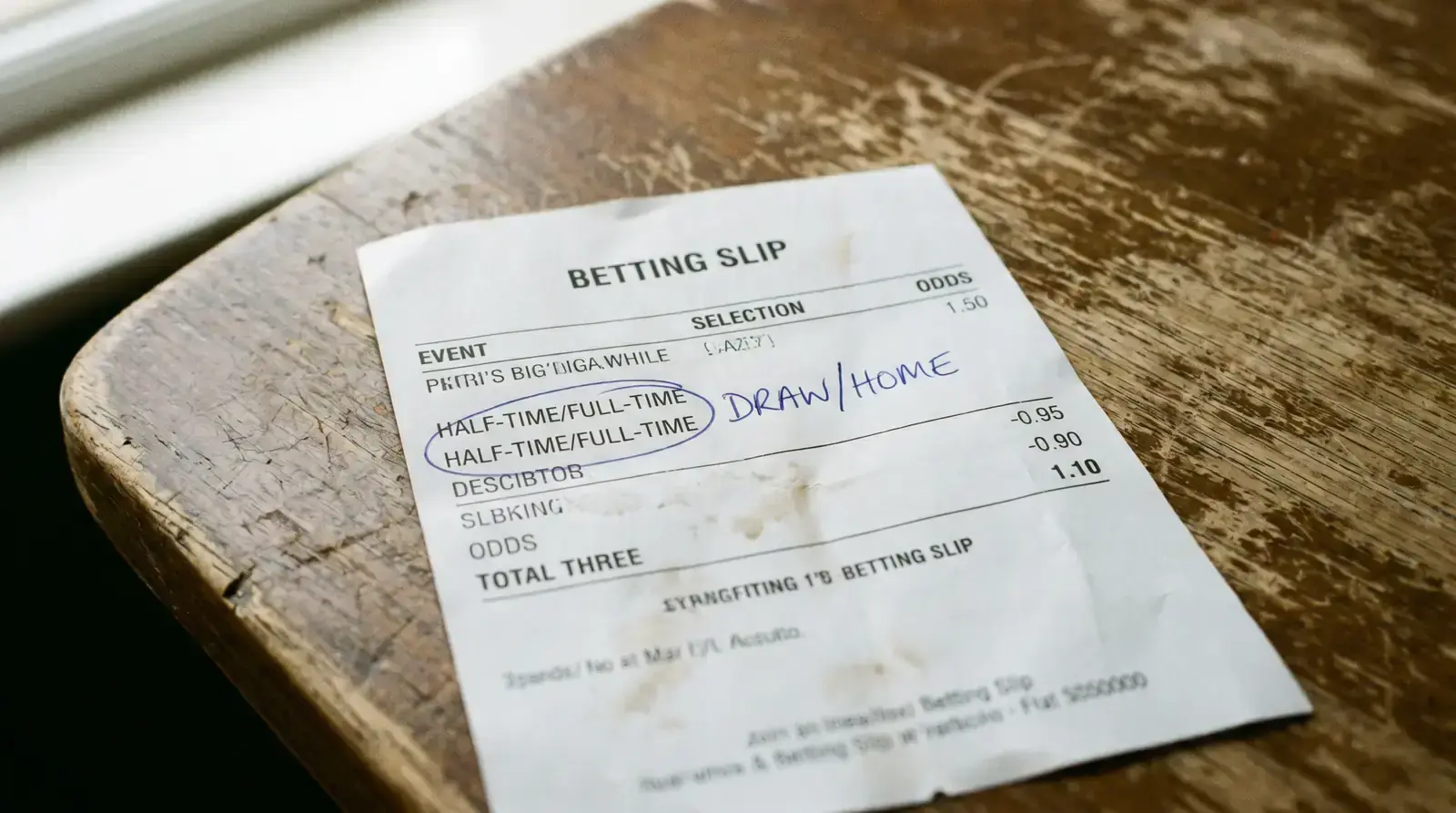
Most UK books offer the standard nine outcomes. A favourite/favourite (the same side leading at both points) typically prices around 1.50 to 1.80 on heavy mismatches and 2.50 to 3.50 on tighter contests. The draw/favourite (sides level at the break, favourite winning by full-time) typically prices around 5.00 to 8.00 depending on how dominant the favourite is overall. The underdog/underdog combination on a heavy mismatch can stretch well past 30.00 and occasionally to 50.00.
The structural fact about rugby that the market captures well is that comebacks are rare. Match-winning side at half-time goes on to win the full match around 80% of the time in major-tournament rugby. Football, by contrast, is closer to 75%. The “comeback” combinations — leading at half-time but losing — therefore price at considerable premiums. The 2025 women’s final saw England close out 33-13 against Canada with a peak BBC audience of 5.8 million, and that result followed the standard pattern: the side leading at half-time built on it rather than being overhauled. Around 6% of UK adults bet on live football in a typical month, and rugby HT/FT volume is concentrated on the same kind of punter — someone who wants more than the bare match-winner price and is willing to take on the half-time condition to get it.
One technical wrinkle. UK books settle HT/FT on the score as it stands at the half-time and full-time whistles, including any sin-bin period or stoppage time. Tries scored after the hooter at half-time count toward the half-time score if the play sequence began before the whistle. Tries in extra time during knockouts do not count — settlement is on the 80-minute scoreline. This last point catches out punters every tournament. Always check the slip’s specific settlement clause before staking.
Why rugby comebacks are rare
The reason HT/FT works as a market on rugby specifically is that the sport produces fewer second-half overhauls than most team sports. Several structural factors compound to make the lead at half-time a strong predictor of the full result.
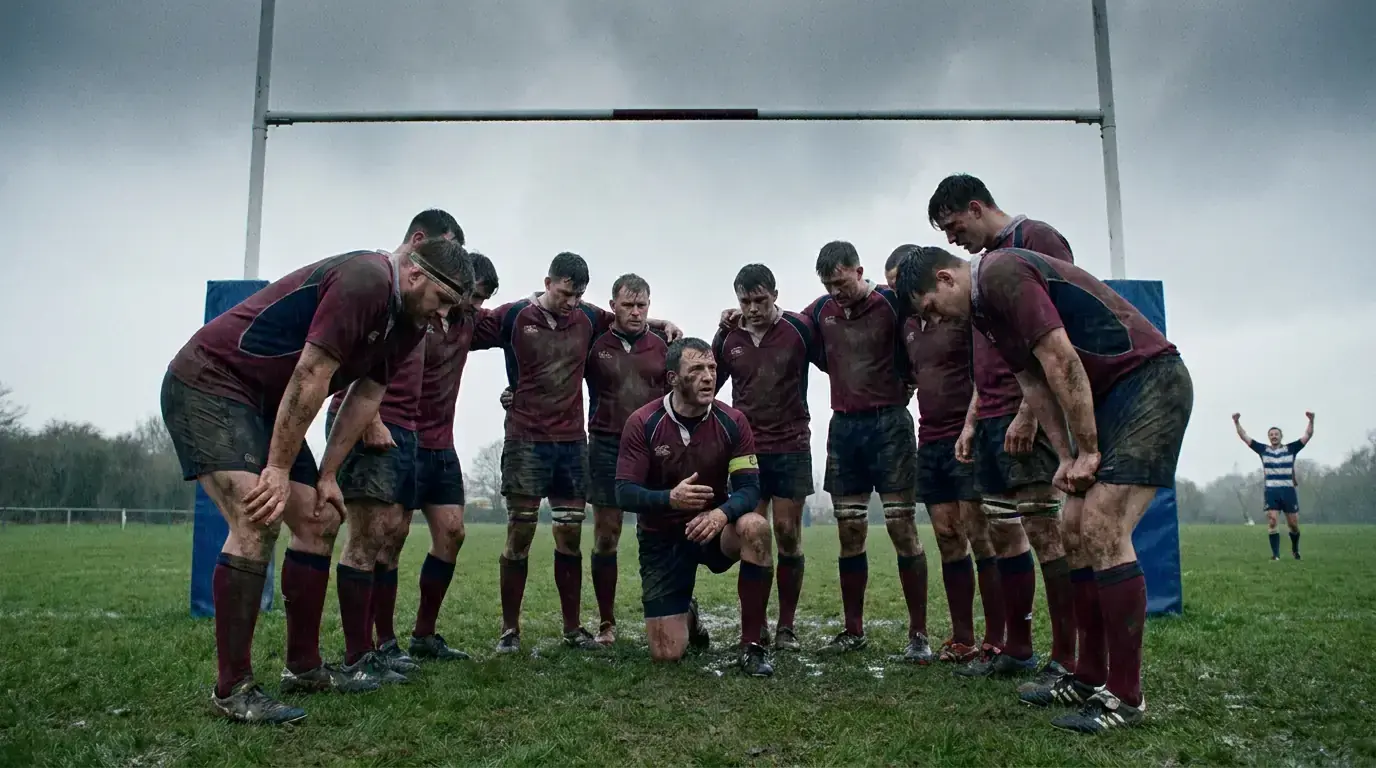
The first is the scoreboard pressure. A side trailing by 10 or more at half-time has to chase points, which means risking offloads, kicking less often for territory, and committing more men at the breakdown. Each of those risks creates further opportunities for the leading side to extend its advantage. The trailing side’s options are limited, and the leading side knows it. A team chasing the game in rugby is significantly more likely to concede a try while attacking than to score one.
The second is conditioning. By the 60th minute of an international match, the side with the better bench is dictating the contest. The bench is determined long before kick-off, and at a Rugby World Cup the gap between front-line nations and tier-two opposition is enormous. If the favourite is leading 17-7 at half-time, the conditioning gap will usually open the result up further over the next 40 minutes, not close it. Comebacks against deeper benches happen, but they are unusual.
The third is set-piece dominance. A scrum that was holding up at 5-3 in the 20th minute will rarely keep holding up at 5-3 in the 60th if the side behind it is genuinely weaker. The cumulative effect of scrum penalties, restart errors, and lineout malfunctions across 80 minutes tends to amplify rather than reverse the early pattern of the match.
None of this means comebacks are impossible. They happen often enough that the cross combinations on HT/FT slips are not unbeatable bets — Argentina’s 2007 third-place playoff and France’s 2011 pool win over the All Blacks are reminders that the rules apply on average, not absolutely. But “on average” is what the bookmaker’s model is built on, and the prices on the cross combinations sit at the long end of the board for a reason. If you want a deeper read on how match dynamics shape the scoreline, the over/under points market sits adjacent to HT/FT and shares much of the same analytical work.
Pricing the nine outcomes
The nine HT/FT combinations are not priced independently. The book starts from its base match-winner price, then layers in the half-time conditions and the correlations between them. Understanding that pricing hierarchy is what lets you spot the occasional value spot.
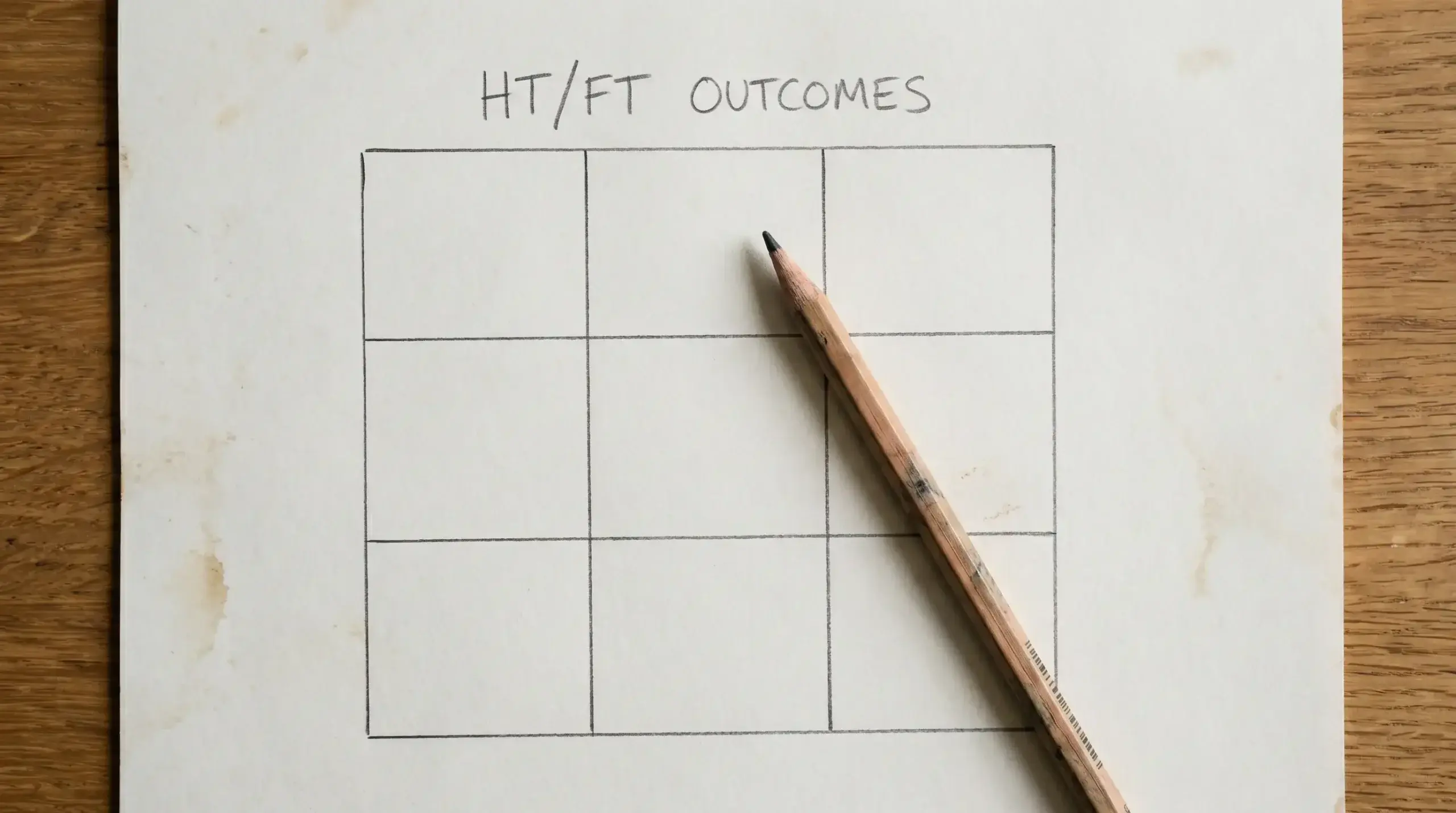
The shortest price on the board is almost always the same-side win at both points — favourite/favourite on a mismatch. The price reflects the most likely scenario in the most common match shape: heavy favourite scores early, leads at half-time, sees out the win. That price is typically too short to bet on its own in a one-off slip, but it can be a useful leg in a bet builder.
The most valuable price spot, in my experience, is the draw/favourite combination on a slow-starting top side. Books price the half-time draw at around a 15-20% probability across most matches, but specific fixtures — a favourite known to start slowly, a wet weather forecast, two heavily kicking sides — can lift that probability into the high 20s without the price adjusting accordingly. A slow-burn favourite who eventually puts a tier-two side to the sword in the second half is the canonical scenario for this slip, and it is priced more generously than the maths supports surprisingly often.
The trap price is the favourite/draw combination — favourite leading at half-time but match settled level. Rugby internationals rarely draw. Across the last several Rugby World Cups, drawn matches account for around 1% of all results. The price on a draw at full-time is therefore typically below the implied probability of an actual draw, which sounds like value, but the slip is still cashing only 1% of the time. The variance does not justify the price.
The other slip worth knowing about is the half-time/full-time on a tier-two side as an underdog. Underdog leading at half-time but losing — the “first-half surprise” pattern — happens often enough that it has its own narrative arc in tournament journalism. The price on underdog/favourite is sometimes in the 4.00 to 6.00 range, which understates how often tier-two sides actually lead at half-time of pool matches against tier-one opposition. Watching the first 20 minutes of the previous tournament’s pool fixtures for the underdog is a useful diligence exercise here. Some sides simply start better than the bookmaker has priced.
The decision before the slip
HT/FT is one of the few markets where the bet thesis matters more than the bet itself. If you are placing a favourite/favourite slip, your real read is that the favourite is going to start strongly. If you are placing a draw/favourite slip, your real read is the opposite. The slip will not save a bad read on the match shape, and no amount of price hunting will fix that.

The discipline I have settled on is to write down — literally — the match shape I expect before opening the HT/FT menu. If my shape is “favourite leads from early on, controls the game throughout”, I take favourite/favourite. If my shape is “tight first half, favourite pulls away after the break”, I take draw/favourite. If my shape is neither of these, I do not take an HT/FT slip at all. The market punishes vague reads, and there are simpler bets to take on the same fixture if I do not have a specific half-time conviction.
