


The moment I stopped treating women’s rugby betting as a curiosity
I will be honest. For most of my career as a Rugby World Cup analyst, women’s rugby was a footnote in my workflow. I knew the names, I respected the players, but the markets were thin, the prices were inconsistent, and I treated the entire space as a research project I would get to “eventually”. Then 444,465 tickets sold across 32 matches of the 2025 tournament in England, with 92 per cent of available capacity gone. The numbers stopped looking like a curiosity. They started looking like a market.
This is the article I should have written three years ago and could not have. The Women’s Rugby World Cup 2025 was the inflection point — for the sport, for British rugby in particular, and for the betting markets that sit around them. Sarah Massey, the managing director of the tournament, was not exaggerating when she called it “a generational moment”. The data backs her up. The question for anyone trying to bet sensibly on women’s rugby now is what specifically changed, what is genuinely tradeable, and where the markets are still catching up to the on-pitch reality.
What follows is the framework I now use for women’s Rugby World Cup betting. I want to cover why the market grew so fast, which betting markets actually trade with enough liquidity to take seriously, how to read form and favourites in a competition where the depth differs from the men’s game, the genuine pricing caveats around liquidity, and what the 2025 tournament signals for everyone betting on the women’s game going forward.
What the 2025 tournament did to the betting environment
The 2025 tournament was not a steady step forward. It was a discontinuity. The peak audience for the final between England and Canada (a 33 to 13 win for the Red Roses) was 5.8 million viewers on the BBC. That was the single most-watched rugby match of the entire year, men’s or women’s. Globally, the tournament generated 147 million hours of viewing, an increase of 336 per cent on the previous edition. Numbers like that change what bookmakers do.
Here is the practical effect. In 2021, women’s Rugby World Cup markets at UK-licensed sportsbooks were typically limited to outright winner, tournament top try scorer, and match winner with handicaps as a vague afterthought. Half the books did not bother putting prices up until the knockouts. By the 2025 tournament, every major UK book was running the women’s tournament with the same market depth they offered the men’s edition — handicaps, totals, half-time/full-time, race to ten points, first try scorer in every fixture. The shift was driven by demand, and the demand was driven by audience.
The opening weekend tells the story cleanly. England’s tournament opener against the United States in Sunderland (a 69-7 hammering) pulled 42,723 to the stadium and peaked at 2.4 million viewers on BBC One, with a further 600,000 watching on iPlayer. The combined opening weekend audience hit 4.6 million, which is more than the entire reach of the 2022 tournament. The director of sport at the BBC, Alex Kay-Jelski, summed it up neatly: “these record-breaking figures for the opening weekend of the Rugby World Cup show the growing passion and interest of fans across the UK.” Translated into betting market terms, that audience represents potential punters, and potential punters drive sportsbook investment in deeper markets.

The semi-final between England and France hit a peak of 3.3 million viewers across BBC Sport platforms. That number is the kind of figure that pulls in casual bettors who would never have looked at a women’s rugby market before. And once casual bettors are in a market, the books offer more product to keep them there. It is a virtuous cycle, but it is also a cycle that took twenty years to start.
The single most quoted figure from the entire tournament was the 81,885 fans who watched the final at the Allianz Stadium in London — a world record attendance for any women’s rugby match. That number landed in the public consciousness in a way the underlying statistics did not. For a punter, the cultural moment matters because it is what attracts new market entrants — both bettors and books — and a market with new entrants is a market where pricing inefficiencies appear.

The markets that actually trade with enough depth to take seriously
This is where the women’s game still needs careful handling. Volume on women’s Rugby World Cup markets is up enormously from where it was, but it is not yet on par with the men’s tournament. That matters because thin markets behave differently from deep ones — prices move more violently in response to small bets, limits are tighter, and you cannot count on getting a bet matched at the screen price for the stake you want.
The match winner market is the most reliable. Every pool fixture, every knockout match — these have proper liquidity at every UK-licensed book, prices comparable to the men’s game in terms of margin, and the ability to place a sensible stake without distorting the market. If you are starting out betting the women’s tournament, this is where I would do the bulk of your work.
Handicap markets work, but with thinner liquidity and wider spreads. The 2025 tournament showed a familiar pattern: top-tier sides like England, France, Canada and New Zealand systematically running up large scores against developing rugby nations, sometimes by 40 or 50 points. The handicap lines reflect that, and value can be hard to find on the favourites’ side because the books know how big the gaps can be. Where I have made money in women’s handicaps is on the second-tier matches such as Italy versus Ireland or Wales versus Scotland — where the line is genuinely uncertain and the spread is wide enough to find mispricing.

Totals markets behave differently in the women’s game than they do in the men’s. Scoring is concentrated. When a tournament generates fewer high-scoring drawn games and more lopsided blowouts, the over/under line gets dragged by extreme scores. Pool fixtures featuring a Tier One side against a developing nation produce point totals well over the line. Knockouts between evenly matched sides go under. The bimodal pattern is sharper than in the men’s game. Recognising which kind of match you are pricing is worth more than knowing any individual team.
Outright markets (back a country to win the tournament) are interesting but thin. The market is concentrated. England as defending tournament finalists, New Zealand as recent winners, and France and Canada as the most credible challengers will between them absorb the vast majority of outright money. Long-shot value exists at the lower end of the market, but stake caps are tighter than you would get on a comparable men’s selection. Build outright positions, but build them modestly.
The markets I would still treat with extra caution are top try scorer, player of the tournament, and the various “race to X points” products. Liquidity is real but shallow, and a single significant injury to a key player can move prices 30 or 40 per cent overnight. Stakes that would be sensible in a men’s market will be limited or rejected in the equivalent women’s product. Test the appetite before you build a position.
Reading form and favourites in a different ecosystem
Pricing a women’s rugby fixture is not the same as pricing a men’s one. The depth of the player pool differs from country to country in ways that matter for betting. A side like England has a fully professional Red Roses programme and unprecedented squad depth. Other Tier One nations are running competitive but smaller programmes. Tier Two sides are often part-time, sometimes amateur. Translating world rankings directly into match probabilities misses the texture.
The Red Roses are the most price-sensitive team in the women’s game, because their dominance is so familiar to UK punters that the temptation is to back them at any number. In 2025, they ran their unbeaten streak to genuinely historic lengths before the final. The market knows this, and the prices reflect it. A short price on England in their pool stage is not value — it is a coin flip on whether the small print might trip you up, because the underlying probability is essentially 99 per cent.
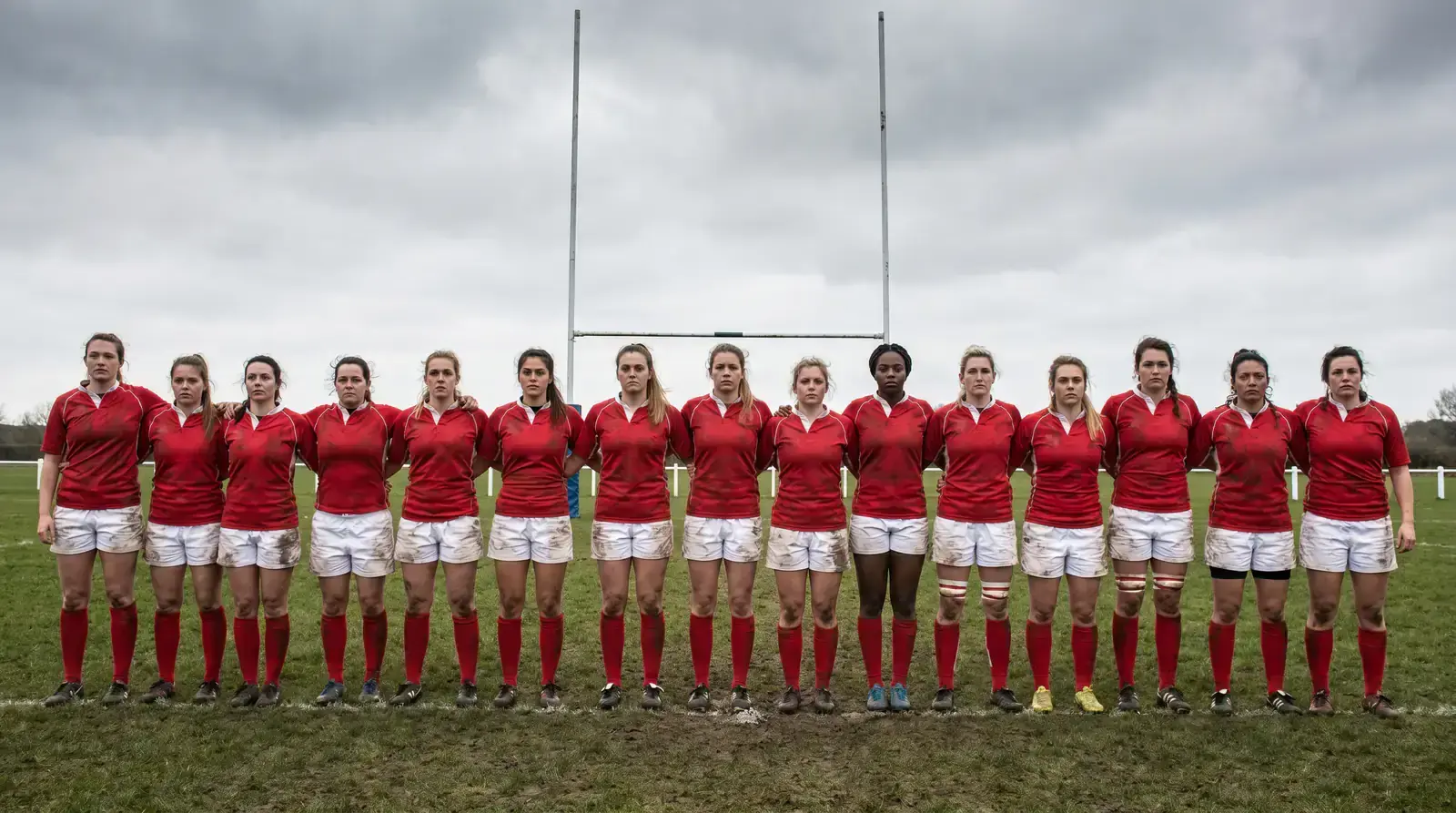
New Zealand, the Black Ferns, sit just below England in market estimation, but the way they get there is different. They tend to play looser, run more tries, and concede more than the structured English defence allows. That difference shows up in totals markets more than in match winners. A New Zealand match consistently goes 8 to 12 points over what a comparable England match would total, all else being equal. Knowing the team-level scoring profile, not just the win probability, is where the second layer of analysis lives.
France are the most volatile of the top tier in betting terms. They have moments of brilliance and moments of structural collapse within the same tournament. The semi-final loss to England in 2025 was a France team that was, by any reasonable metric, capable of winning the tournament — but they did not. The market typically prices France for their best, which means there is occasional value laying them when you have a structural reason to think a specific match plays poorly to their strengths.
Below the top three, the field is genuinely competitive. Canada’s run to the final in 2025 was not a fluke; it was the culmination of a decade of programme building, and the market is now pricing them as a top-four side at every tournament. Ireland, Italy, Wales and Scotland sit in a competitive Tier 1B with significant overlap in match outcomes. That is where the most interesting pool fixtures will be from a betting perspective in future tournaments, because the prices are genuinely undecided in a way that the matches involving the top three rarely are.
One stat that has stuck with me: 53 per cent of attendees at 2025 tournament matches were women, with fans travelling from 133 countries. That demographic mix is genuinely different from the men’s game, and it has consequences. Books are noticing the audience composition and adjusting how they market and price products. Some of the early sentiment-driven price moves in 2025 came from groups of bettors who were not historically a major component of the rugby betting pool. If you have spent twenty years calibrating to how the men’s market behaves, expect the women’s market to surprise you with where money concentrates.
The liquidity and pricing caveats I tell every new bettor
I want to be direct here, because I have watched people walk into women’s rugby markets with men’s game expectations and lose money for no good structural reason. The market is real now, but it is not yet identical, and the differences matter.
Stake limits on women’s outright and futures markets at UK-licensed books are typically lower than the equivalent men’s products. You can find yourself with an accepted bet at a healthy price, but only for a fraction of the stake you intended. The book will quietly cap you. There is no recourse and no warning — it is buried in their terms. Test stake limits with small bets before you build a position you cannot complete.
Price discrepancies between books are larger than in the men’s game. In a deep market, the price on a major match winner will rarely vary by more than two or three per cent of implied probability across the top UK books. In the women’s tournament, gaps of five or six per cent are not unusual on the same fixture at the same moment. That cuts both ways. There is genuine value to be found by comparison-shopping rigorously. There is also a risk that the longer price is the slower book, and that the price will move sharply once the book catches up.
Live betting on women’s matches is thinner again. In-play limits are tighter, market suspensions during meaningful events last longer, and the available depth of markets — bet builder products in particular — is smaller. Live betting in the men’s Rugby World Cup is a sophisticated environment. Live betting in the women’s tournament is closer to where the men’s product was five or six years ago. Adjust your expectations accordingly.

A subtler caveat is how news travels. Injury announcements, team selections and tactical news in the women’s game reach the betting market more slowly than they do in the men’s. There is less media attention, fewer journalists tracking every training session, and longer windows between something happening and the price moving. If you have an information edge — a player from a club you follow, a contact in a national setup — that edge is worth more in a women’s market than it would be in the equivalent men’s product. I have made some of my best women’s rugby bets on information that was in the public domain but had not yet been reflected in the price.
The 95 per cent of 2025 tournament attendees who said they planned to keep watching women’s rugby in future is the single most important data point for the long-term direction of these markets. Demand is sustainable. The product is here to stay. But the maturation of the market is a process measured in years, not tournaments. Be patient with your edge.
What the 2025 tournament signals for everyone betting going forward
Ruby Tui, the former Black Ferns international working as a BBC pundit during the 2025 tournament, said something that has been quoted everywhere since: “If you could buy shares in women’s rugby, it would be your number one investment right now.” She was talking about the sport. The same logic applies to the markets that sit around it.
Three specific signals from 2025 will shape how I bet women’s Rugby World Cup markets for the next decade. The first is that the tournament is now a genuinely commercial event, which means books invest in pricing and product. Sarah Massey, the managing director of the 2025 tournament, captured the mood when she said: “We’re ready to break records in attendances, viewership and engagement. This is going to be the biggest global celebration of women’s rugby that we have ever seen.” She was right. The records broke. And every broken record made the market stronger.
The second signal is that the top of the market has stabilised. England, New Zealand, Canada and France are now the genuine top tier. The era of one team dominating every tournament looks to be ending. That is good for bettors because closer competition means more honest pricing on the outright markets, fewer 1.10 favourites, and more matches where the price actually reflects uncertainty.
The third signal is the geographic spread of the fan base — those 133 countries, that 53 per cent female audience composition. The market is no longer just British and antipodean punters. International demand changes the shape of liquidity. Some markets that used to be dead because nobody in the UK cared now have genuine global participation. That makes prices fairer and harder to game, but it also means that books take women’s markets seriously enough to provide proper product.

For the practical bettor, my advice is short. Get familiar with the women’s market mechanics now — handicaps, totals, and outright markets in particular — and bet small while you calibrate. If you want to dive into the practical side of how all these markets actually work in a live setting, I covered the mechanics in detail in my piece on the full set of Rugby World Cup markets and how they trade, and the same logic applies almost identically to the women’s tournament with the liquidity caveats above.
One last thing. Alan Gilpin, the chief executive of World Rugby, said of the 2025 event: “the story of this tournament is much deeper than [just figures] and in my view, we’ve been involved in the greatest Rugby World Cup of all time.” That is a chief executive talking, and chief executives are paid to make bold claims. But the figures back him up. And from a betting perspective, the most important consequence of that depth is that the women’s game has moved permanently into the category of serious sports betting markets. Treat it that way.
The other thing I would underline is the economic footprint. The 2025 tournament was estimated to have generated 294.7 million pounds of impact, with around 80 per cent of that activity happening outside London. That dispersed regional impact tells you the audience is genuinely national, not concentrated in one stadium catchment. National audiences sustain national betting markets. Concentrated audiences do not. The 2025 numbers, read carefully, confirm the women’s game has the broad-based demand that betting markets need to thrive long term.
