

The reason I stopped backing Springbok overs
For three consecutive series I backed over 27.5 total points on Springbok internationals. I lost all three. Then I went back and pulled the South African total points data across two World Cup cycles. The mean was 23.4. The median was 22. The over 27.5 line was systematically inflated by the operator pricing model, which appeared to assume a more open Springbok playing pattern than the team has actually delivered for years. The structural mispricing went the operator’s way for hundreds of UK punters each weekend, because the pattern was counter-intuitive to the assumed Springbok identity. The lesson was that the Springboks brand image — physicality, set-piece grind, low-scoring wins — is the price they should be backed at, not the price the over markets imply.
South Africa are the defending Rugby World Cup champions and the most distinctive tactical profile in the tournament. The market prices them at 3.75 for 2027 — second favourites behind New Zealand at 3.50 — and the implied 26.7% championship probability sits as the second-highest on the board. Reading the Springbok market is the second-most important reading exercise for the tournament, and it differs structurally from how every other side prices.
The defending champion premium and back-to-back history
South Africa won the 2023 World Cup, becoming the first nation to win four World Cups outright and the first to win back-to-back in the modern format. That defending-champion status carries a premium in the 2027 market — the 3.75 price compresses below what a strict squad-quality model would suggest for a team without the recent trophy.

The historical base rate for back-to-back-to-back champions is small. Across the nine Rugby World Cups since 1987, no team has won three consecutive tournaments. South Africa winning in 2023 after also winning 2019 puts them in rare structural territory. The market’s 26.7% implied probability for the 2027 win accounts for the difficulty of completing a three-peat — a difficulty that is more behavioural than squad-based.
The squad continuity from 2023 is the structural argument for the price. The core of the 2023 winning side is still active, the Rassie Erasmus coaching structure is unchanged, and the tactical pattern that delivered back-to-back trophies remains the team’s identity. The case for value at 3.75 rests on this continuity argument.
The Springbok tactical pattern and what it means for markets
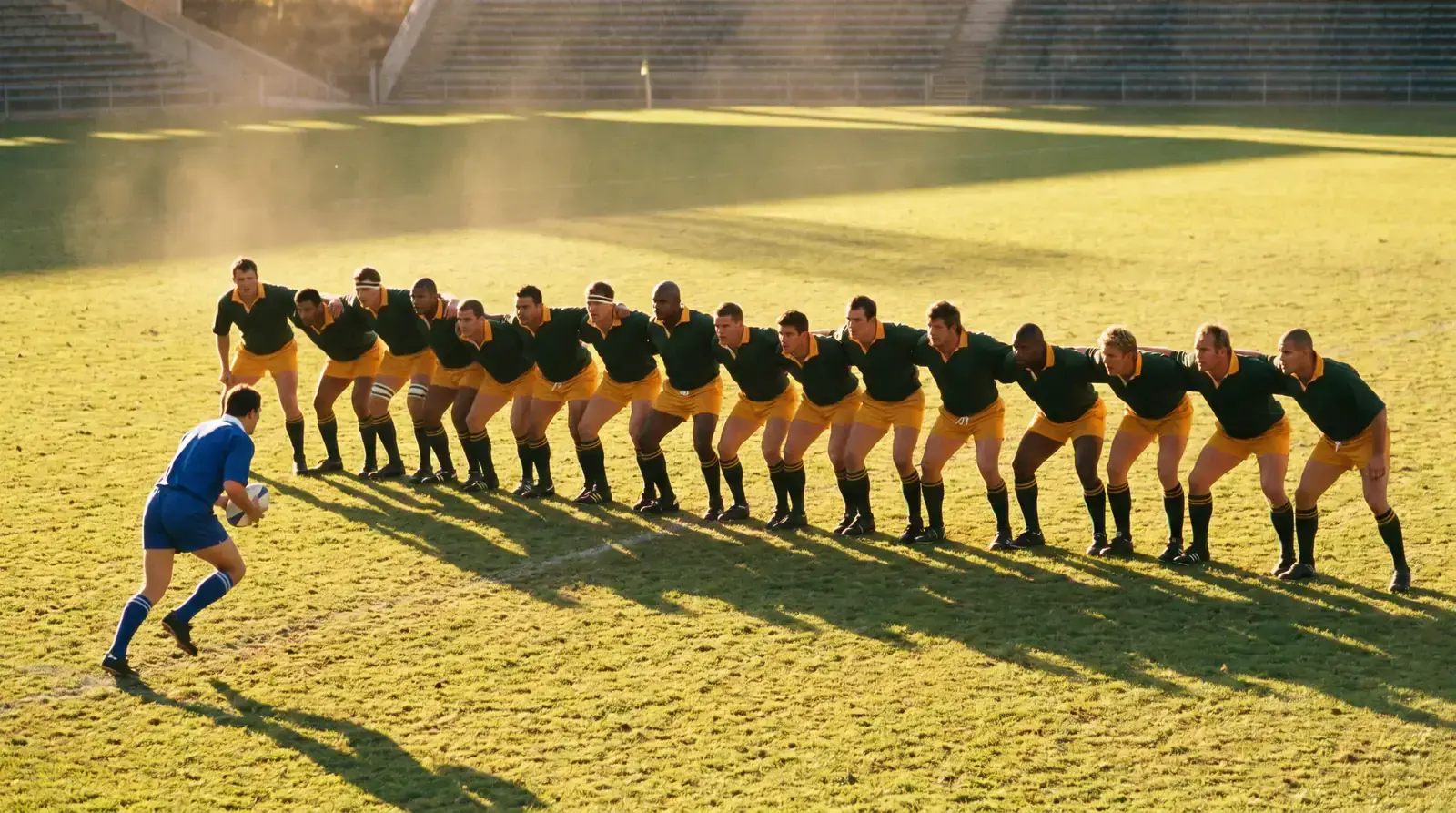
South Africa’s tactical pattern across the past two World Cup cycles has emphasised set-piece pressure, kicking dominance, defensive line speed, and bench impact (the “bomb squad” structure of a heavily forward-loaded replacements bench). The pattern produces a specific match-state signature — lower total points, narrower margins, more matches decided in the final 15 minutes.

The market data follows the pattern. Springbok internationals over the past three years have averaged 26.8 points per match — substantially below the New Zealand 31.4 average and the average across tier-one internationals broadly. The total points over markets typically price at 27.5 or 28.5 against tier-one opposition, which sits above the actual mean. The under has been the systematically winning side of those markets for cycles.
The handicap markets carry their own structure. South African favourites tend to win by narrower margins than the handicap line implies. Against tier-one opposition the Springbok handicap is typically -3.5 or -4.5, and the actual winning margins in the past two years have clustered between 1 and 6 points. The handicap-underdog play has been profitable on Springbok favourites with more consistency than on any other tier-one side.
The bench impact and second-half betting
South Africa’s “bomb squad” — the heavily forward-loaded replacements bench — is the single most distinctive tactical feature of the team and the most under-appreciated market input. The replacements come on around the 50-minute mark and produce a measurable lift in physical dominance through the third quarter and into the final 20.
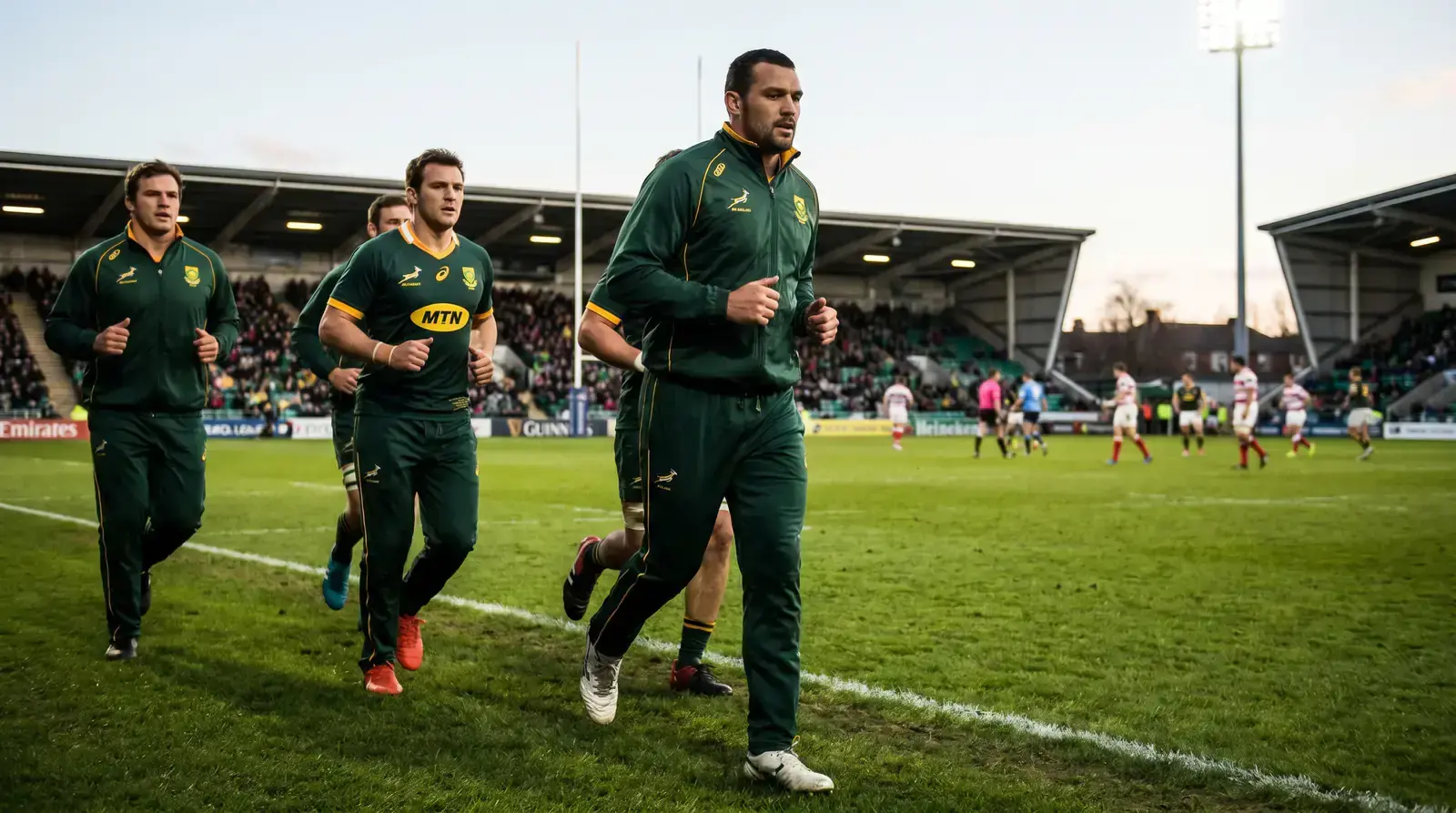
The second-half betting markets reflect this pattern, but typically not by enough. Live betting in the 40 to 60 minute window of Springbok matches has historically produced value on the Springbok side, because the price has not yet absorbed the bench impact that has not yet appeared on the scoreboard. Patient live bettors who enter Springbok positions in that 40 to 60 minute window have a structural edge that the pre-match markets do not price.
The structural reason the pre-match market does not price it more aggressively is that the bench impact does not always convert to scoring in the third quarter. It often converts to scoring in the 60 to 80 minute window, by which time the live price has fully absorbed the impact and the value has compressed. The value window is therefore narrow — 40 to 60 minutes — and reading the match state in that window is the structural skill.
The 2027 pool and the schedule shape
South Africa’s pool composition for 2027 will be confirmed closer to the tournament. As a top-seeded nation they will draw a favourable pool — one tier-one or tier-two side plus two lower-tier sides — and progress to the round of 16 with high probability and minimal injury exposure.

The 24-team format adds the round of 16 to the championship route, taking the knockout match count to five. For the Springboks at 3.75, the additional knockout match adds variance to the route — each match carries irreducible upset risk regardless of squad quality. The 26.7% implied probability already factors this five-match route, which is part of why the price is not shorter despite the defending-champion status.
The 1 October to 13 November tournament window in Australia means the Springboks travel away from home but also away from the depths of southern hemisphere winter. The conditioning and recovery patterns should be neutral to slightly favourable versus a northern hemisphere host tournament. The Australian venues match the Springbok physical pattern well — large pitches, firm surfaces, conducive to set-piece-led rugby.
Live betting on Springbok fixtures
The in-play market on South African matches has a structural feature that distinguishes it from the All Blacks profile: the live price moves more slowly relative to the on-pitch state. The volume of UK live betting on Springbok matches is significant but lower than on equivalent New Zealand fixtures, and the slower price movement creates entry windows that the higher-volume All Blacks market does not offer.
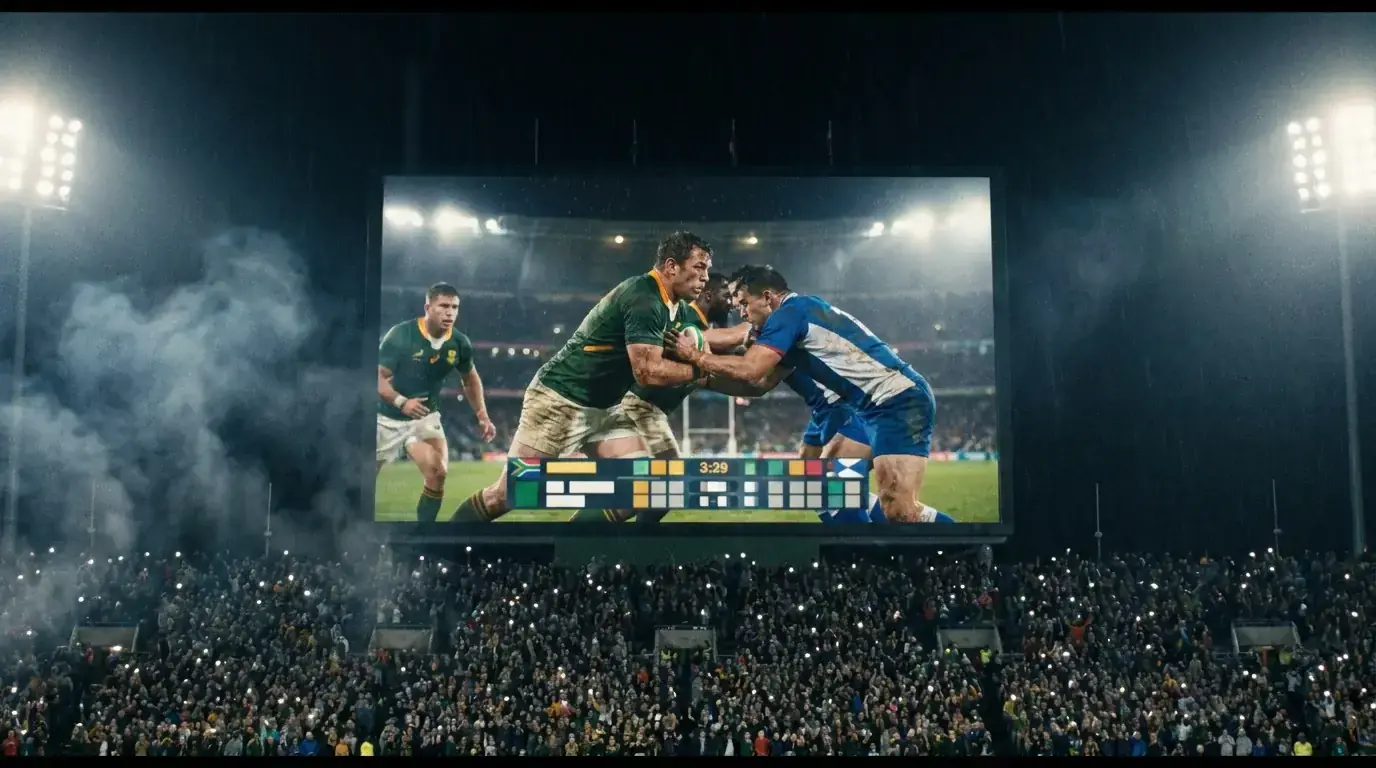
The pattern that recurs is the live underdog price on Springbok matches drifting too long after a try against. The Springbok recovery pattern — set-piece pressure, defensive line speed, bench impact — is a slow-burn rather than a quick scoring response. The live price typically prices the trailing position more aggressively than the match state justifies, because the live model leans on points-on-the-board momentum rather than the structural recovery indicators the Springboks specialise in.
The 290 million monthly UK online bets and the £1.45 billion Q1 2025 online gross gambling yield include substantial volume on Rugby Championship and autumn fixtures where the Springboks feature. The patient live bettor who knows the recovery pattern can find recurring value in the 50 to 65 minute window when the live price has not yet absorbed the structural lift from the bench.
Knockout-stage history and the matchup table
South Africa have won the World Cup in 1995, 2007, 2019, and 2023 — a pattern of four wins from nine tournaments that puts them as the most-successful nation in tournament history (joint with New Zealand at three). The structural feature of those wins is the recurring tight-margin pattern — South Africa’s four titles have all been won via at least one knockout match decided by single-digit points.

The matchup table for 2027 highlights three sides as primary threats: New Zealand (the historical rival, the 2023 final at one-point margin, the most-tested matchup in international rugby), Ireland (the consistent ranking pressure and the close pool-stage record), and France (the tactical sophistication that has produced upsets in recent cycles). The market’s 3.75 already prices these matchups.
The sides the Springboks tend to handle most comfortably are the second-tier and third-tier opposition where physical dominance translates directly. Against tier-three sides the Springbok handicap tends to settle well above the line. Against tier-one sides the handicap tends to settle below the line. The pattern is structural enough that handicap-side selection by opposition tier is a recurring market input.
Reading the Springboks for the tournament as a whole
The 3.75 outright price reflects a defending champion at the structural peak of an extended cycle, with the difficulty of a three-peat partly priced in. The case for value rests on squad continuity and the unmatched knockout-stage record across the past two cycles. The case against value rests on the historical rarity of three consecutive wins and the variance of a five-match knockout route. For market exposure to the Springboks, the value tends to sit in handicap-underdog markets against tier-one opposition, under markets on total points against any opposition, and live in-play markets in the 50 to 65 minute window when the bench impact has not yet been priced. The defining structural feature of the Springbok profile is that the team plays in a way the market consistently misreads — and that mispricing has been the source of recurring value across multiple cycles. Whether the 2027 cycle produces the same patterns depends on squad continuity holding through the next 18 months. For the broader picture of how the 2027 outright market positions all the contenders, my piece on the 2027 favourites market reading covers the comparative context.