


Why the 2027 edition rewrites every model I have used since 2015
I had a working spreadsheet for Rugby World Cup outright betting that I built in 2014 and kept patching across the 2015, 2019 and 2023 tournaments. It assumed 20 teams, four pools of five, and a straight quarter-final cliff with no second chances. The first time I tried to apply it to the 2027 cycle, half the cells broke. The tournament being staged in Australia from 1 October to 13 November is the first ever to expand to 24 teams across six pools of four, with a brand-new Round of 16 dropped in before the quarters. Three decades of pricing intuition built on the old structure no longer maps cleanly.
That sounds like a complaint. It is not. An expanded format is the most interesting thing that has happened to this market in a generation because it creates two specific shifts the average punter has not yet priced in. First, the addition of a knockout round before the quarters means there is one extra match for every team that goes deep — more exposure, more variance, more chances for an upset to settle the question of which side actually lifts the trophy. Second, the larger pool count means more genuine mismatches in group play, which makes pool stage handicap markets behave much more like Six Nations totals than the tight pool football people are used to.
I want to walk through the format in proper detail, talk about where and when the action lands, look at the markets the new structure reshapes most aggressively, give you a sense of the sheer scale of what is happening in Australia, and finish with the early angles I am playing personally. If you are coming into the 2027 cycle fresh, treat this as the briefing I would have wanted three years out.
What 24 teams and a Round of 16 actually change
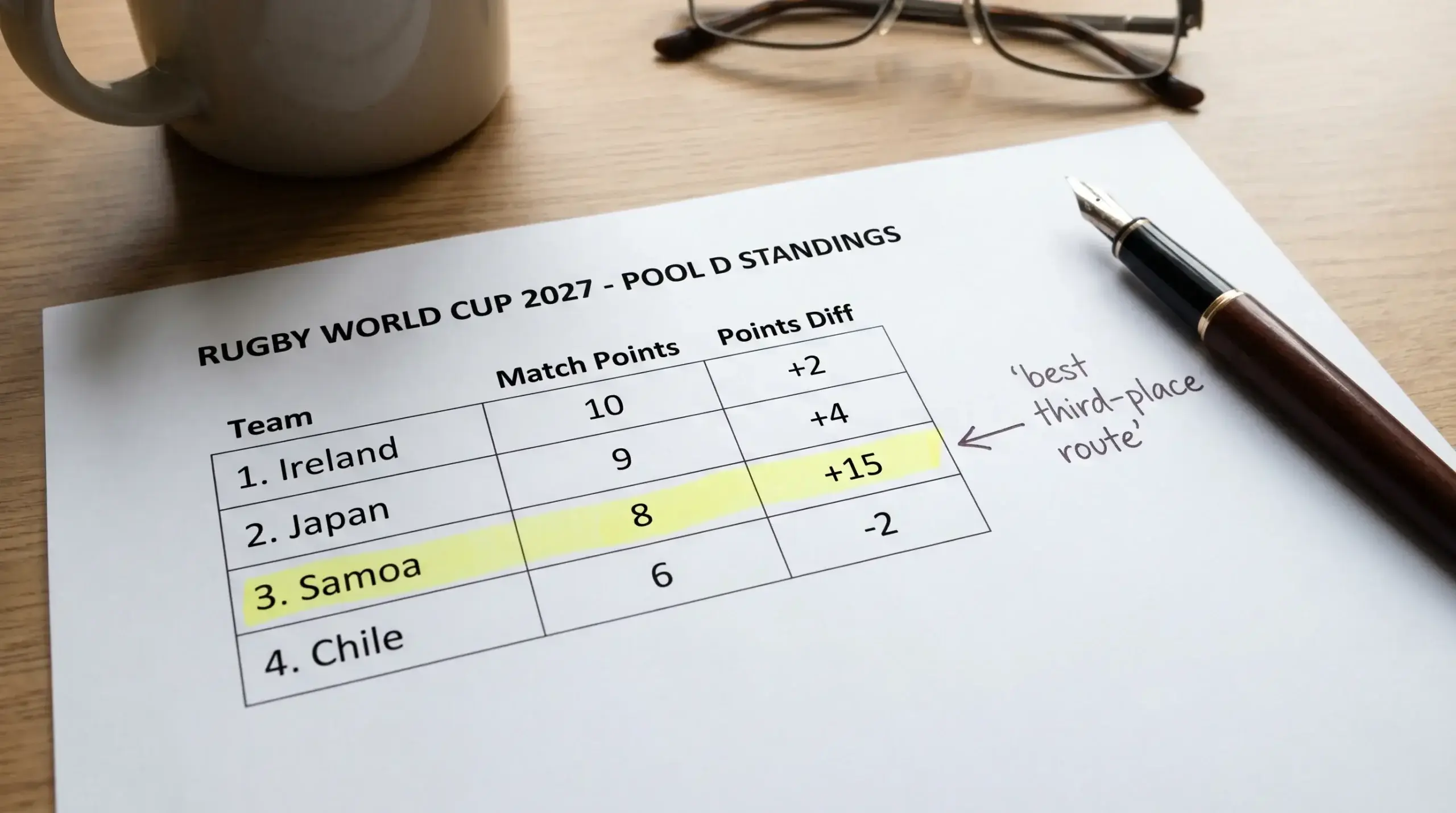
The headline number is six pools instead of four. Each pool has four teams, plays three matches, and the top two qualify automatically. That much is intuitive. The wrinkle is the four “best third-placed” sides also progress, because 12 teams need to fill the Round of 16 and only 12 qualifying slots from the pool structure get you there. That single rule changes how you should price a lot of pool-stage markets.
Under the old format, finishing third was elimination — a clean, brutal cliff. Now finishing third with a respectable points difference can still take you through, and that turns several previously dead matches into live betting propositions. Pool stage handicaps on the third- and fourth-rated sides in each group suddenly carry stakes for the bettor as well as the participants. A losing bonus point against the second seed, or a 25-point defeat instead of a 45-point one, can be the difference between extending the tournament and going home. Bookmakers know this. They will price it accordingly. The window of mispricing tends to be in the first 48 hours after the draw, when public models have not yet adjusted.

The Round of 16 itself is the structural change everyone will be talking about by the time we get to October 2027. The tournament features 52 matches in total, with semi-finals and the final hosted at Sydney’s Accor Stadium, an 82,000-seat venue. From a betting perspective, the extra knockout round does two things. It adds a match for every contender, which dilutes the per-match win probability needed to lift the trophy. And it removes some of the gap between the top tier and the second tier of nations, because giants who used to walk into quarter-finals now have to win a knockout against a side they might previously have only faced in a pool.
That second point is the one I keep coming back to. In 2023, the All Blacks and the Springboks did not meet any genuine Tier One opposition until the knockouts. In 2027, both could find themselves in a Round of 16 fixture against a Tier Two side that has had eight years of professional development since the format last looked like this. Upset risk goes up. Outright prices on the very shortest favourites should arguably drift, although the early lines suggest the market is being slow to digest that.
One thing the new format does not change is the seeding mechanism. Pool draws are still made well in advance based on world rankings, which means by the time tickets are on sale you already know roughly which countries will face which. That predictability is unusual in major sport, and it makes ante-post outright betting genuinely playable rather than a stab in the dark.
Australia 2027: where the tournament lives and when
The numbers around hosting are extraordinary even before you factor in the betting angle. Tournament organisers expect 250,000 international visitors and AUD$1.3 billion of direct visitor spending across seven host cities. Bradley Woods of the Australian Hotels Association in Western Australia put it well when he called it “a landmark moment for Western Australia and an extraordinary opportunity for our hotel and hospitality industry to shine on the global stage.” That kind of build-up matters because it tells you the local infrastructure investment is real — better stadiums, better travel between cities, full crowds throughout the pool stage rather than only at the marquee fixtures.
Why does any of that matter to a punter sat in a flat in Manchester? Because crowd dynamics affect prices. Home advantage in rugby is statistically meaningful — across major Tier One competitions, home sides win roughly 60 per cent of fixtures, all else being equal. A neutral venue with 80,000 partisan locals supporting Australia is, in pricing terms, a half-home venue for the Wallabies and a half-away venue for everyone else. Books price this in, but they typically under-price the genuine intangibles like crowd noise affecting line-out calls.
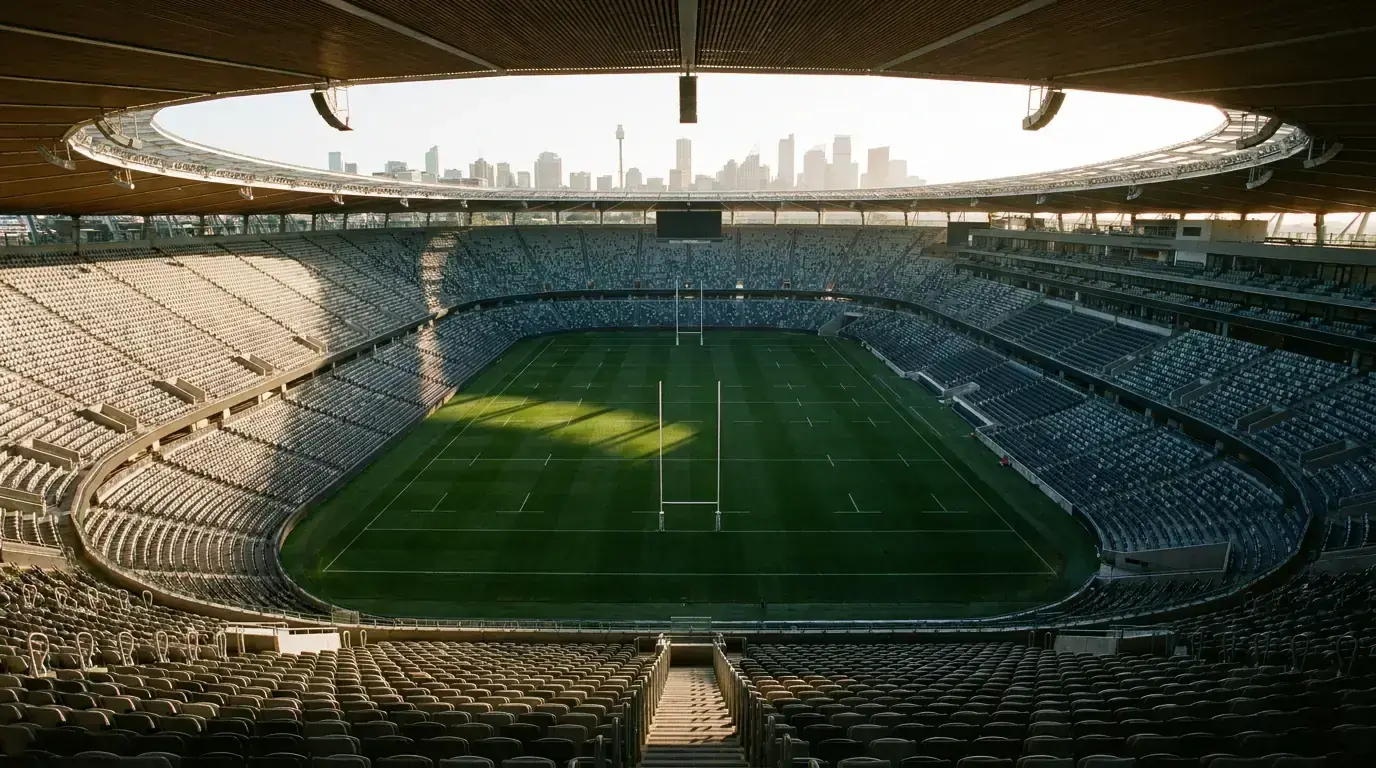
The tournament window of 1 October to 13 November is also worth noting. That is the southern hemisphere’s transition from late winter into spring, with warm but not stifling daytime conditions in most of the host cities and cooler evenings in Melbourne and Sydney. Weather is a smaller factor than it would be at a November event in northern Europe, but Brisbane in particular can deliver tropical downpours that significantly affect totals markets. I keep a weather window forecast open during pool stage match weeks for exactly that reason.
The host cities themselves — Brisbane, Sydney, Melbourne, Perth, Adelaide, Townsville and the Gold Coast — also create something less obvious: travel fatigue for non-host nations. Australia is enormous. A pool stage that takes a team from Townsville to Perth to Melbourne is meaningfully different from a tightly clustered European tournament. Form across an eight-day cycle of cross-continent travel is not the same as form at a friendly. Sides with strong squad depth pull ahead. Sides relying on a thin first-choice fifteen suffer. Both of those facts feed directly into knockout-stage prices.

The markets the new format reshapes most aggressively
If you only adjusted one set of bets to reflect the expanded structure, it should be pool-stage qualifying markets. The “to qualify from Pool X” market — where you back a team to make the Round of 16 — used to be a binary call between the first and second seeds. Now there is a third route, via the best third-placed slots. That changes the pricing arithmetic for Tier Two nations dramatically. Backing a side like Fiji or Georgia to qualify is no longer a coin-flip on toppling a Tier One favourite; it is a question of finishing third with a competitive points difference.
I have been tracking the early lines and there is clear inconsistency between books on how much value to give that “third-place route”. Some sportsbooks have repriced Tier Two qualification odds sharply since the format change was confirmed. Others are still using effectively the old model. The gap is significant enough that any disciplined comparison shopper can pick up systematically better numbers on Tier Two qualification by being patient.
Outright tournament odds are the second market the format reshapes. By the time the tournament’s ticket programme was confirmed, 18 teams had already qualified for 2027 — a different starting point from the late-completing qualification windows of previous editions. That earlier certainty tightens outright prices because the market has more confirmed contenders to weigh, which is good for the books and slightly bad for the punter looking for an unloved long shot. Ante-post value, if it exists, sits in the second tier of European nations and the strongest of the new qualifiers. Ireland, Scotland and Wales are all priced more aggressively than they were at this stage of the 2023 cycle, in part because the extra Round of 16 reduces the lottery element that used to disadvantage them.
Stage of elimination markets get more interesting too. With one extra knockout round, you can now back a team specifically to be eliminated in the Round of 16 — a market that did not exist in previous tournaments. That sounds like a niche, and it is, but it is also a clean way to express a view that a particular Tier One side has been overrated in outright pricing without taking on the variance of a head-to-head match bet.
The one market I would treat with extra caution under the new format is top try scorer. Six pools instead of four means more fixtures in the pool stage, which sounds like it should help finishers stack up tries. In practice it also means more rotation, more opportunities for a bench-stacked Tier Two side to leak tries to multiple opposition wings, and more chaos around the leaderboard. I would not touch this market early. The roughly 290 million online sports bets that flow through the UK each month include many top try scorer plays placed three months out, and most of them are dead before the tournament starts. Let the picture clarify before you commit.
The scale of what is being staged
It is worth taking a moment to register just how big this tournament is, because the scale itself drives some of the market dynamics. More than 2.5 million tickets will be available — more than any previous men’s Rugby World Cup. Rugby Australia is forecasting an economic impact of 2.8 billion dollars and a cumulative global television audience of 4 billion viewers across the six weeks. To put that audience into perspective, Simon Birmingham, then Australia’s Federal Tourism Minister, described the Rugby World Cup as “the second largest single-sport event in the world… a major shot in the arm for the Australian tourism industry.” That is the scale of attention this will command.
From a betting market perspective, scale translates into liquidity. A tournament that 4 billion people are paying some attention to is a tournament where every UK sportsbook will have full-time traders dedicated to the market, sharper prices, and meaningful enough volume that the books actually want your action. Compare that with a quiet international friendly where the spreads are wide because nobody is offering enough money to make tight pricing worth the trader’s effort. Big tournaments are paradoxically better environments for finding value, because the market is fast enough that mispricings appear and get corrected — and if you are watching closely, you can catch them mid-correction.
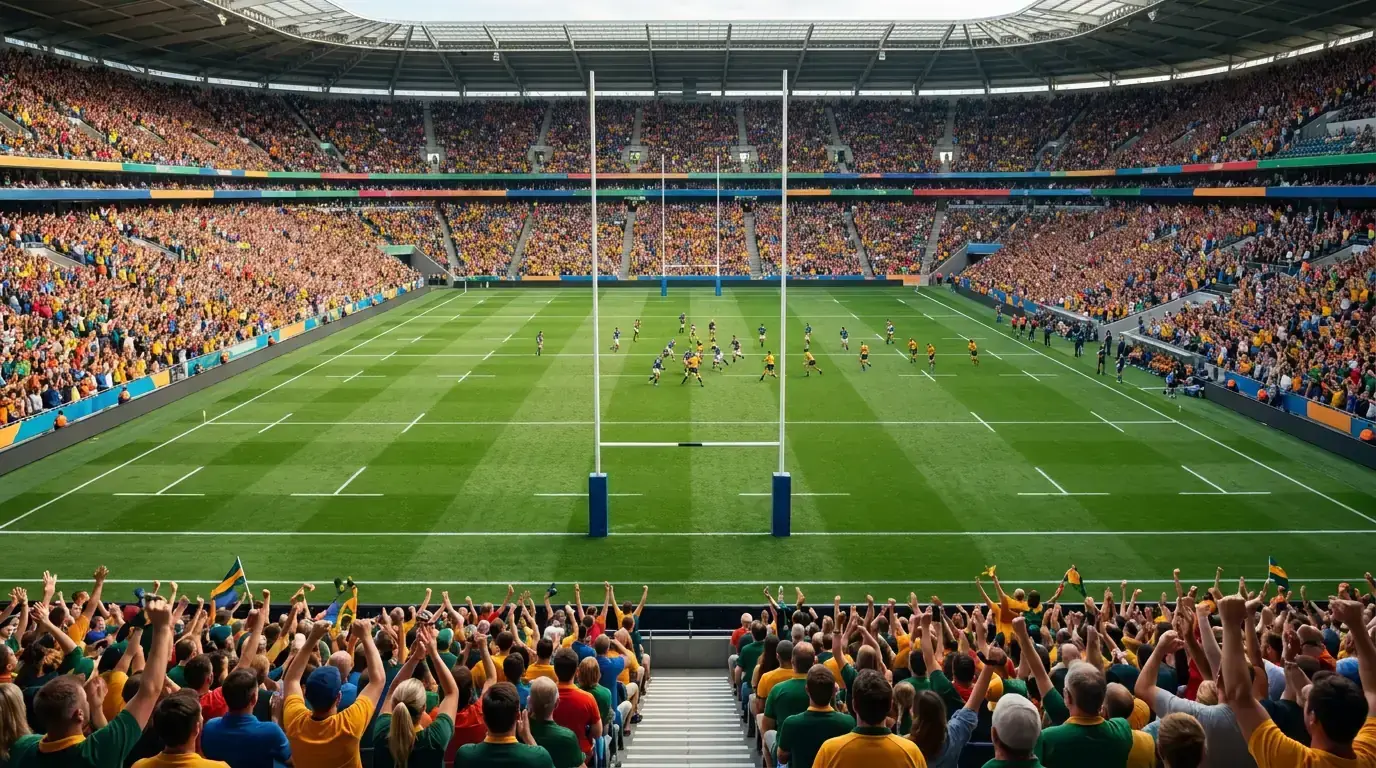
Television exposure also drives in-running betting volumes to levels you do not see at other times. The 2025 women’s tournament showed what happens when broadcast reach lifts: peak audiences hit millions, and the in-play markets traded harder than any women’s rugby market had ever traded before. The 2027 men’s tournament will be that same phenomenon at perhaps ten times the scale. If you are interested in live betting specifically, the depth of available markets during a Rugby World Cup pool match is not comparable to any other rugby event on the calendar.
Marc Marinos, talking about what hosting the tournament means for the local game, captured the broader point well: “(This is) huge for us in terms of resetting our whole landscape… not only about the revenue you generate out of the event, it’s about connecting with new commercial partners, re-engaging with broadcasters.” For a punter, that translates into a more competitive sportsbook environment around the event, with promotions and enhanced prices appearing more often than at any other point in the rugby calendar.
One quiet effect of the scale: ante-post markets open earlier and stay open longer than for any other rugby competition. By the time you are reading this, decent prices on the eight or nine most likely contenders have already been available for over a year. The 2031 cycle will not get those prices on the board for another two years at minimum.
Where I am positioning for 2027
I want to be careful here. This section is not a tip sheet. It is a description of how I am thinking about the early 2027 outright market, with my reasoning exposed so you can disagree with parts of it intelligently. If you are looking to go deeper on which teams the market is actually rating as 2027 contenders, I have a more thorough breakdown of that field elsewhere.
The top of the market sits where you would expect. New Zealand around decimal 3.50 and South Africa around 3.75 reflect the two sides’ track record — between them they have won seven of the ten Rugby World Cups ever held — and the market’s reluctance to look much past them. The implied probabilities of roughly 28 per cent each give them a combined 56 per cent chance of lifting the trophy, which is unusually concentrated for an outright market with 24 entrants. The historical base rate suggests that concentration is roughly right. It does not, however, leave value at the very top.
I am more interested in the second tier. France priced at roughly a 20 per cent implied probability is a fascinating number, because they were the pre-tournament favourites in 2023 and ultimately exited at the quarter-final stage. The market has corrected, but I would argue it has overcorrected. A French side with home advantage was a different proposition from a French side travelling to Australia, but the underlying quality of the squad has not collapsed.
The genuine value, if it exists, sits with two specific kinds of bet. The first is on Tier Two qualifying markets where books have been slow to repricing the third-place route through pools. The second is on stage-of-elimination bets that let you express specific structural views without taking on outright tournament variance — for example, backing a particular Tier One side to be eliminated specifically at the quarter-final stage rather than going further or going out earlier.

I am not staking heavily on outright markets this early. Three years of injury risk and form variance is too long a horizon to size up. Small ante-post positions on three or four selections, sized at a fraction of a per cent of bankroll each, give me exposure to the market without overcommitting. The bulk of stakes will go on in-play and match markets once the tournament starts.
One last note: the new format genuinely does favour structurally sound sides over flashier ones. An extra knockout round means an extra opportunity to lose. Teams that grind, who win the games they should win without giving the bench oxygen, will go further than the highlight-reel sides that depend on big moments breaking their way. If you are choosing between two contenders with similar prices, the duller side is almost always the better bet under this format. That is the through-line of my entire 2027 read.
If you take nothing else from this piece, take this. The Rugby World Cup 2027 is not the 2023 tournament with two extra teams bolted on. It is structurally a different event, and the books are still catching up to that fact. The next eighteen months will see prices move in directions experienced punters from previous cycles will find counter-intuitive. The bettors who do well are going to be the ones willing to throw out their old mental models and read the new format on its own terms. The ones who do badly will be the ones still pattern-matching to 2019.
