


The market that lets you bet exactly the match you predicted
The reason I started using bet builders is that match-winner bets often felt too coarse. I would watch a match expecting a specific pattern — the forwards dominate, the kicker has a busy day, the centres score the two tries — and the only market that paid out on that read was the slip that ignored most of it. The bet builder fixed that. It is the only way to turn a specific prediction about how a match unfolds into a single slip.
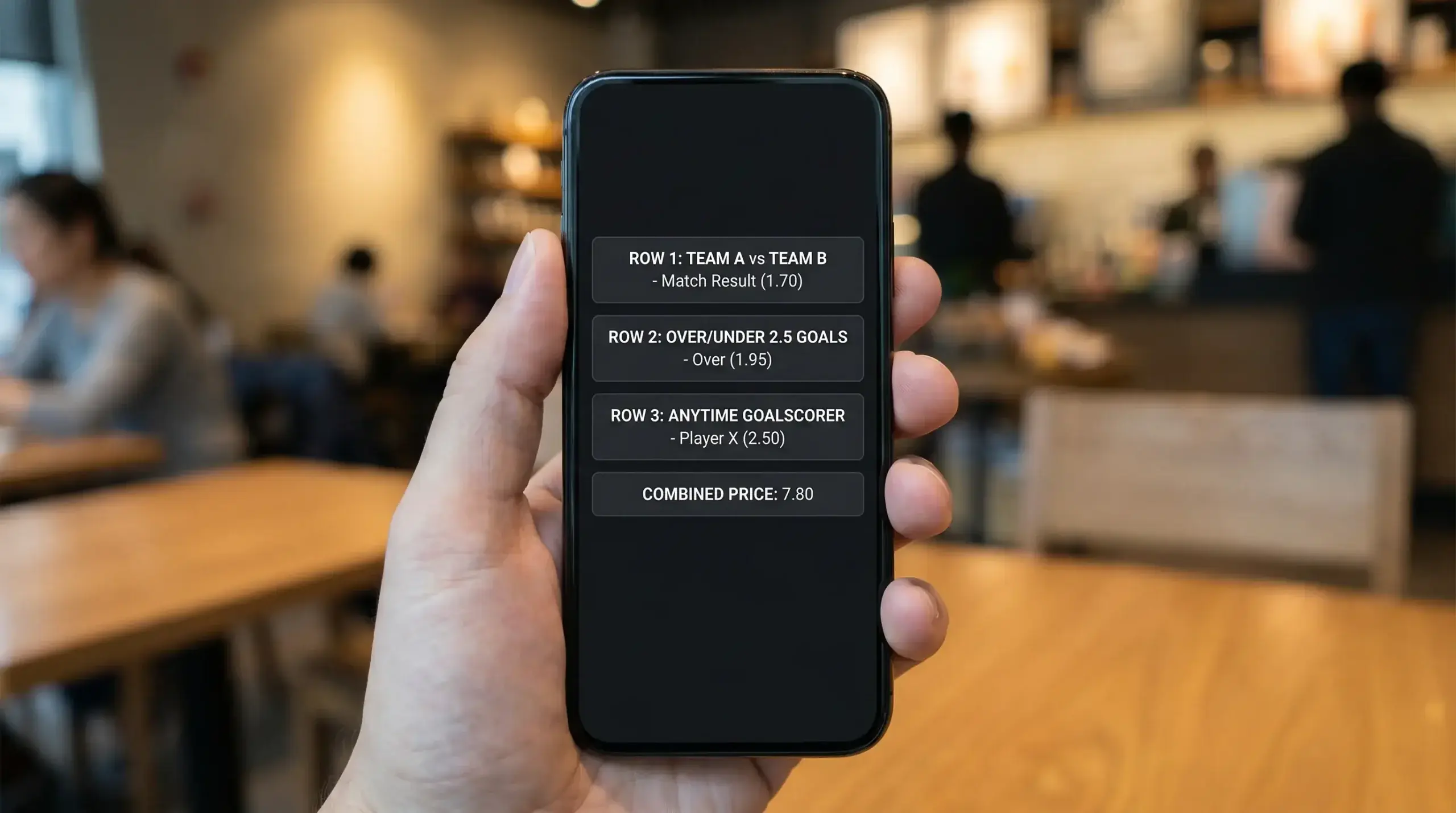
A bet builder combines multiple selections from one fixture into a single bet. Pick a match winner, a handicap, a totals line, a first try scorer, and a number of tries — all from the same game — and the book combines them into one price. Every selection has to land for the slip to pay. Lose one leg, lose the whole bet.
The same general accumulator maths applies — combined price compounds, combined probability compounds, the bookmaker’s margin compounds — but with one key structural difference. The selections within a single match are correlated. That correlation is what makes the bet builder a genuinely different product from a cross-match acca, and it is what makes the pricing on bet builders one of the more interesting puzzles in modern rugby betting.
Combining markets in one fixture
The mechanic is straightforward. The slip starts empty. You add a selection — say, a match winner — then add another from the same fixture, say a handicap or totals line, then a third, then a fourth. The book recalculates the combined price after each addition, accounting for the correlation between the selections. The final price is almost always lower than the simple product of the individual prices would suggest.

That adjustment for correlation is the technical heart of the bet builder. If two selections are positively correlated — for example, “Team A wins” and “Team A covers a -10.5 handicap” — both legs winning together is much more likely than treating them as independent. The book reduces the combined price to reflect that. Correlation works the other way too. Selecting “under 50.5 total points” and “first try scored in the first 20 minutes” pulls in opposite directions for the rest of the match, and the price reflects that.
Recent UK quarterly data has shown growing online gambling activity, with online GGY in early 2025 up 7% to £1.45 billion — bet builders have been one of the formats driving that growth. The product is genuinely innovative on the operator side. Each book runs its own correlation model, which is why the same set of selections will produce different combined prices at different books. Shopping the same slip across two or three operators is a useful habit. The variance can be 10–20% on a typical four-leg build.
UK books typically allow bet builders of 2 to 12 legs from a single fixture. Some markets — second-half props, specific player markets — may be locked out from inclusion to keep the correlation model manageable. If a selection you want to add greys out, the model has flagged the combination as too correlated to price cleanly, or simply too volatile.
Correlation and pricing
The single most useful concept on a bet builder slip is understanding which legs reinforce each other and which legs cancel each other out. The bookmaker’s model captures correlation, but it is not perfect, and the gaps in the model are where occasional value sits.

Positive correlation slips are easier to spot. “Team A to win”, “Team A to cover -7.5”, “Team A to lead at half-time” — these are essentially three different framings of the same prediction. The bet builder will price the combination at a meaningful discount to the standalone product of the prices, but the slip still locks in a specific scenario where one team dominates. If your read is that the favourite will be on top from kick-off, a positive-correlation build matches the thesis cleanly.
Negative correlation slips are harder to read. “Over 50.5 total points” plus “Team A wins by 1–9 points” implies that both sides are scoring heavily and the game is tight. Both legs landing together is mathematically possible but requires a specific match shape. The bookmaker often prices these combinations more generously than they should, because the correlation model under-rates how rare both legs landing simultaneously actually is. Occasionally you can find value in negative-correlation builds for that reason, but the variance is high.
Around 290 million online bets are placed in the UK each month, and a non-trivial slice of that volume now lands in bet builders precisely because the product offers the illusion of customisation. The book’s edge is bigger here than on standalone selections, because the correlation pricing always errs on the side of the operator. Treat the product as such — a customisation premium that you are paying for the precision of the bet.
If you want to compare this product with the cross-match version, the multi-fixture accumulator market is the natural counterpart, and the differences in how risk compounds across the two formats are worth understanding before you reach for either.
Realistic builds that actually have a chance
The single biggest mistake on bet builders is adding legs because you can. The slip starts at three legs and the punter keeps adding, drawn by the rising price. By the eighth leg, the combined probability is below 5%, and the slip is essentially a long shot dressed up as a sensible build.
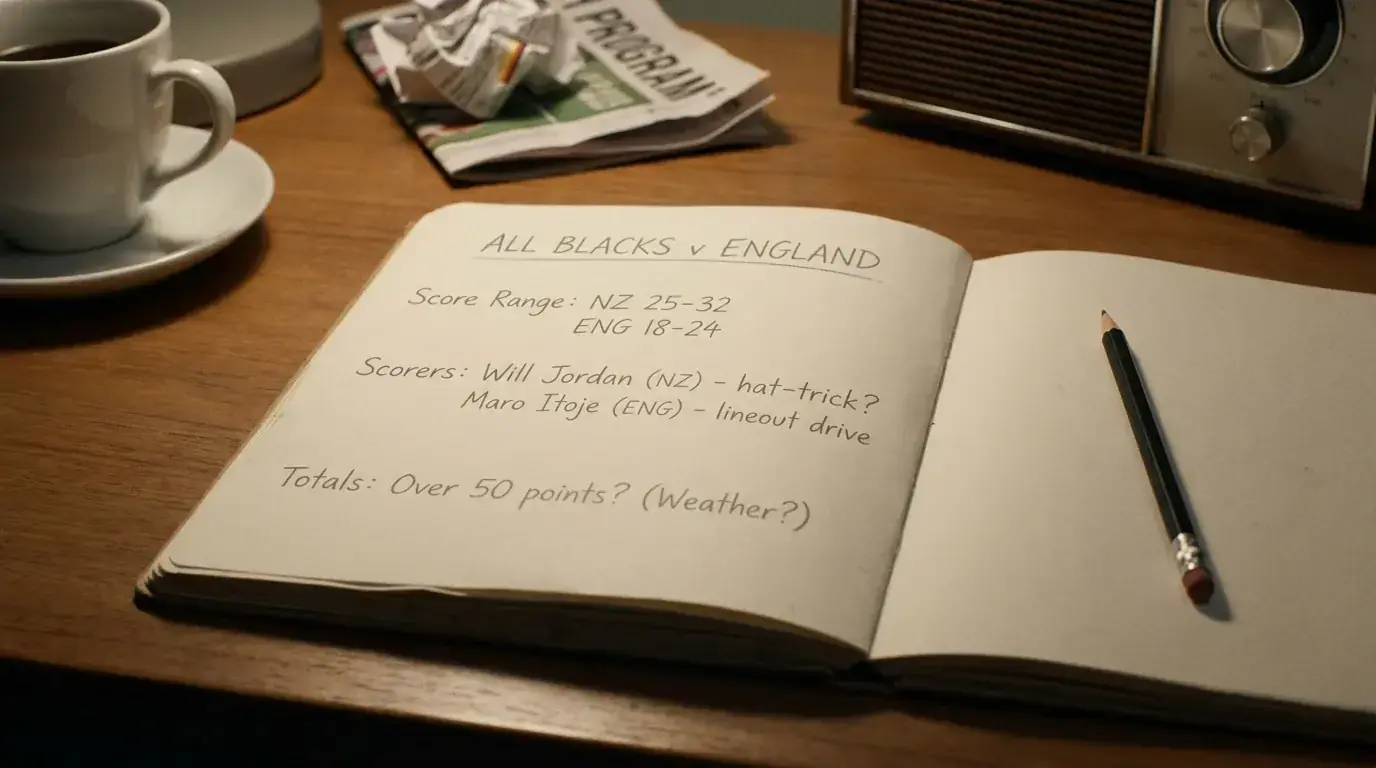
The discipline I have settled on is a three-to-four leg ceiling for most matches. The first leg is the foundation — the prediction the rest of the slip hangs on. Usually a match winner or a handicap, sometimes a totals line. The second and third legs are reinforcements that share the same prediction in different language. A fourth leg, when I add it, is something that has to happen regardless of the match flow — a specific player to score a try, a try in the first half, a yellow card.
The slips that have worked best for me are tight, internally coherent reads. Three or four selections that all describe the same match shape. The slips that have worked worst are six- and seven-leg builds with legs going in different directions — a winner, a totals line, a niche prop, a try scorer, a margin band. Those slips are essentially betting against themselves, and the bookmaker’s correlation pricing punishes that.
Stake sizing on bet builders should be smaller than on equivalent single bets. The variance is higher, and you should be willing to swallow a few losing slips while one cashes occasionally. A unit size of one-third to one-half of your normal single-bet unit is a reasonable starting point for builds of three to four legs. Beyond five legs, the slip is a speculative entertainment product and should be staked as such — small amounts, accepted variance.
The thing nobody tells you about bet builders
The reason bet builders proliferated as a product is that they are extraordinarily sticky on phones. The interface is designed to make adding legs feel like a game. Each new selection updates the price, the slip animates, the punter feels invested in the build. By the time the slip is submitted, the punter has emotionally committed to legs they would never have picked individually.

This is not a conspiracy. It is product design responding to behavioural data. Books know that punters who build longer slips stake more often, and the in-app experience is engineered to encourage exactly that. Knowing it is happening is the first defence. Setting your own pre-build constraints — three legs max, must be related to a single match shape, must have a stake limit — is the second.
The other underappreciated point is that bet builders are not available on every fixture or every market. Some lower-profile pool matches at the Rugby World Cup will not have a bet builder option at all. Some markets — niche props, in-running specials — will be locked out. The product works best on fixtures with deep market coverage, which at the Rugby World Cup means quarter-finals onwards and the bigger pool matches between top-tier sides.
One last note. Cash out on bet builders is offered at most UK books but typically at less generous terms than on standalone selections. The book has a smaller window to manage its risk on a multi-leg build, so the cash-out figure tends to sit further below the strict fair value. If you build a slip with the intention of trading it out partway through the match, do the maths on the expected cash-out spread before staking. The slip you thought offered an exit may be much harder to exit than a simpler bet would have been.
